
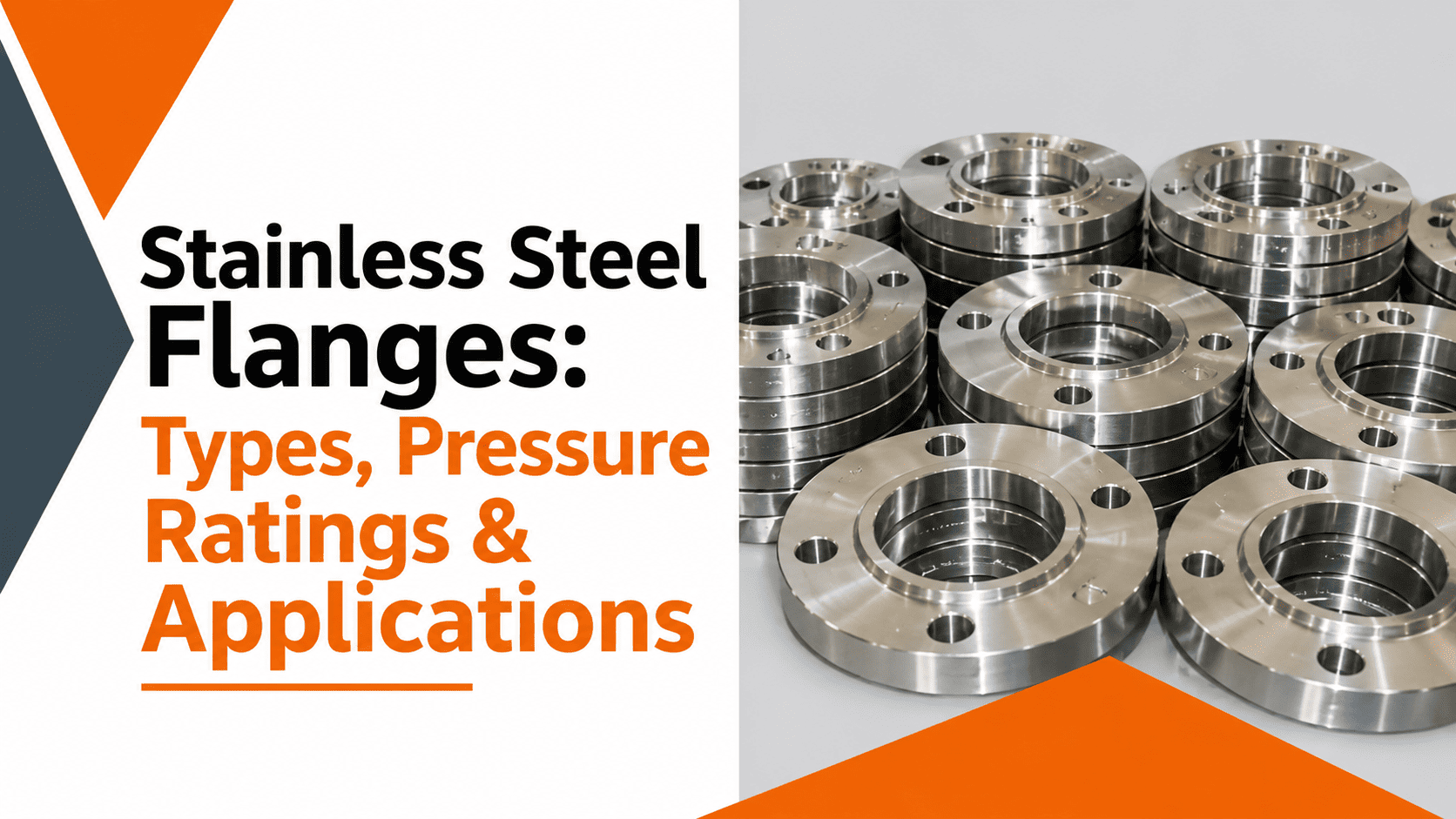
Stainless steel flanges connect pipes, valves, pumps and other equipment through a bolted joint that can be opened for inspection, maintenance or replacement. Weld neck, slip-on, blind, socket weld and threaded designs each suit different service conditions. Engineers select them by ASME pressure class, material grade and facing.
What Are Stainless Steel Flanges?
A flange forms a demountable joint between two sections of pipe, or between pipe and a valve, pump or vessel nozzle. Bolts draw the two mating faces together and compress a gasket, which seals the joint against internal pressure. Unlike welded connections, this arrangement allows removal without cutting. Correct selection rests on four details: material grade, dimensions, facing type and pressure class. In most installations, these components align with other stainless steel pipe fittings in the same line.
Types of Stainless Steel Flanges
Flange type determines how the component attaches to the pipe and how much stress the joint can carry. Four designs cover most industrial piping work.
Weld Neck Flanges
Weld neck flanges carry a tapered hub butt-welded to the pipe, matching its bore. The design transfers stress smoothly and suits high pressure, high temperature and cyclic service.
Slip-On Flanges
The slip-on flange slides over the pipe end and takes fillet welds inside and out. Fabrication is simpler and alignment easier, which suits lower-pressure lines.
Blind Flanges
Blind flanges have no bore. Bolted to a pipe end, nozzle or equipment opening, they close the line while keeping access for future tie-ins or pressure testing.
Socket Weld and Threaded Flanges
Socket weld flanges take the pipe into a recessed bore and a single fillet weld. Threaded versions avoid welding. Both suit small-bore lines, generally NPS 2 and below, where the design code permits them.
Stainless Steel Flange Pressure Ratings Explained
A pressure rating defines the maximum working pressure a flange can handle at a stated temperature under a given standard. ASME B16.5 sets the classes used across most industrial piping: 150, 300, 600, 900, 1500 and 2500. The class number is not a pressure value in PSI. A Class 150 flange in material group 2.2, which covers 304L and 316L, carries roughly 15.9 bar at 38°C, and this value decreases as temperature rises. Material group, service temperature, flange standard and design conditions shape the allowable pressure. Check the pressure-temperature tables in the governing standard before you specify a class.
Common Stainless Steel Flange Materials and Grades
Grades 304 and 304L cover general service, both built on an 18% chromium, 8% nickel base. The L variants hold carbon at 0.030% maximum, which limits carbide precipitation during welding. Adding 2 to 3% molybdenum produces 316 and 316L, grades often considered where chlorides or acidic media attack standard austenitics. Corrosion exposure, operating temperature, fluid composition and fabrication method decide the choice.
Applications of Stainless Steel Flanges
Flanged joints appear wherever a piping system needs regular access for cleaning, inspection or equipment changeout. Five sectors drive most demand for stainless steel flanges.
- Oil and gas: Process piping, valves and separators are bolted together for turnaround access.
- Chemical processing: Lines carrying acids and solvents rely on gasketed joints.
- Water treatment: Pumps, filtration skids and headers can be dismantled without cutting the pipe.
- Food and pharmaceutical processing: Hygienic lines need crevice-free joints that clean between batches.
- Power and industrial plants: Steam headers and utility lines connect per the design code.
How to Choose the Right Stainless Steel Flange
Specification errors surface late, usually at hydrotest or during a shutdown. Work through five checks before you release a purchase order for stainless steel flanges.
- Pressure and temperature: Fix design pressure and maximum temperature first.
- Grade selection: Match the grade to the process medium and corrosion conditions.
- Type, size and standard: Confirm flange type, bore size, facing and the governing standard.
- Gasket and bolting: Check gasket material, bolt grade, torque values and installation clearance.
- Documentation: Verify mill test certificates and dimensional compliance before the material leaves the supplier.
Conclusion
Flange type, material grade, pressure class and operating conditions work together; a correct choice on one and an error on another still produces a failed joint. Review the applicable standard, confirm the service conditions, then buy from a supplier who provides test certification. Nandishwar Steel supplies stainless steel flanges alongside a full range of pipe fittings and bar products.