
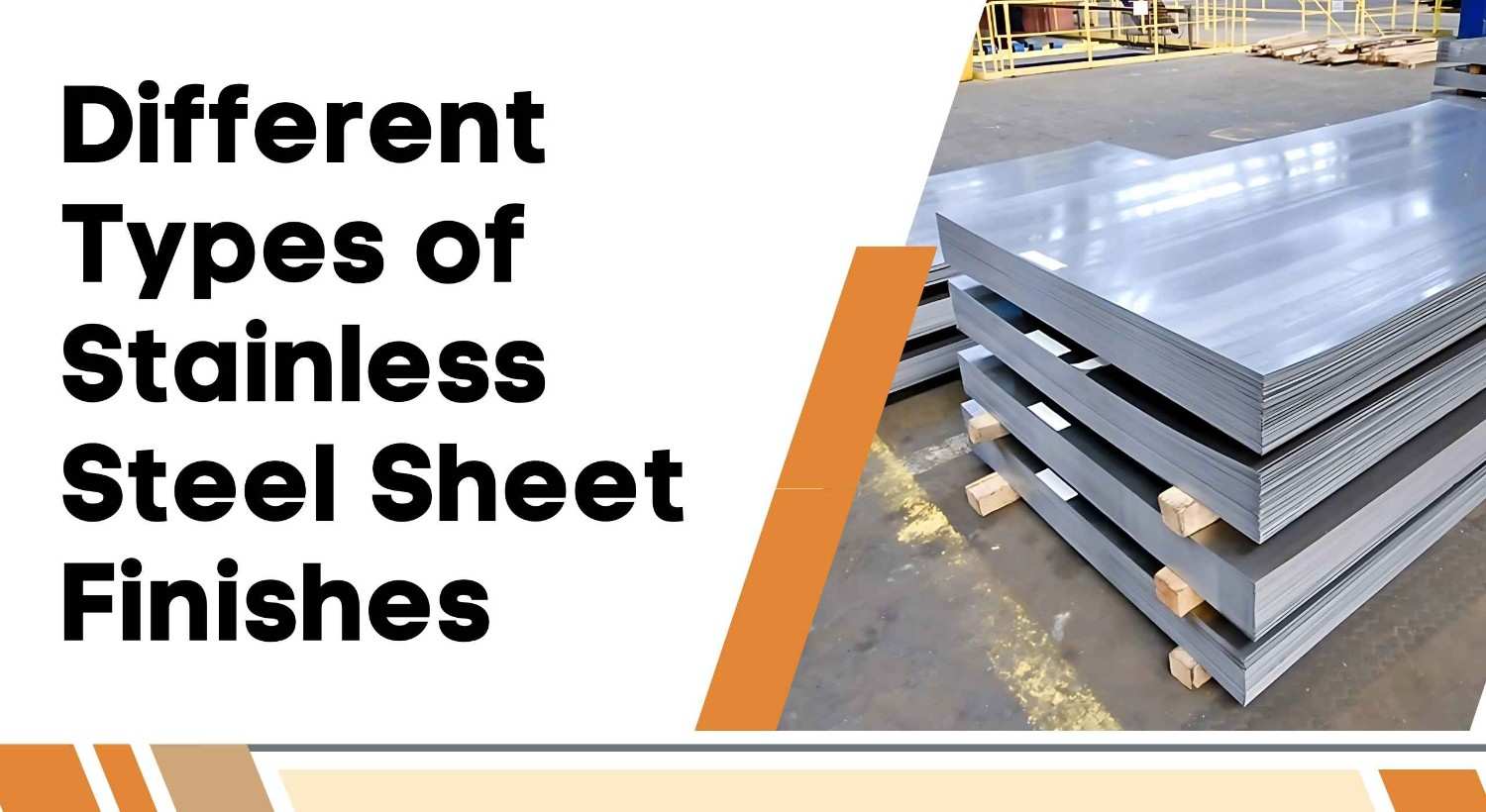
Stainless steel sheet finishes add both functional and visual qualities to the metal. They determine how the surface looks, feels, and performs in specific applications. A well-chosen coating can make stainless steel more scratch-resistant, cleanable, and durable. The sheet is used in industrial equipment, building facades, kitchen surfaces, and decorative panels. Understanding the available finishes helps in selecting the most suitable option.
A Stainless Steel Sheet finish is the surface texture or polish achieved through a mechanical, chemical, or electrochemical process. Each finish has an impact on the reflectivity, smoothness, corrosion resistance and wear qualities. Some coatings are engineered for great reflectivity and attractiveness while others are created to reduce glare, improve grip or resist harsh industrial environments. Choosing the appropriate finish ensures that the stainless steel functions effectively in the specified environment.
Types of Stainless Steel Sheet Finishes
- No. 1 Finish
The No. 1 finish is created by hot rolling the steel, then annealing and acid pickling to remove scale. It generates a rough, dull and uneven surface that is unsuitable for decorative applications. This finish is used in industrial applications such as heat exchangers, pressure vessels, and big tanks where beauty is not important as strength and corrosion resistance. - No. 2B Finish
The No. 2B finish is one of the most popular stainless steel sheet finishes. It is made by cold rolling, then annealing, pickling, and light polishing with steel rolls. The end effect is a smooth, matte surface with a subtle gloss. It is perfect for applications that demand a clean, consistent appearance and high corrosion protection such as food processing equipment, kitchen surfaces, chemical containers, and medical instruments. - No. 2D Finish
The No. 2D finish is comparable to the 2B finish except for the final light polishing process. It has a dull, non-reflective appearance, making it ideal for applications that require a low-glare surface. This finish is utilized on industrial and structural components that do not require a cosmetic appearance but require the corrosion resistance of stainless steel. - BA (Bright Annealed) Finish
The Bright Annealed (BA) finish is achieved by annealing stainless steel in a controlled environment to avoid oxidation. This method creates a bright, highly reflecting surface without the need for extra polishing. The BA finish is perfect for decorative applications such as elevator interiors, architectural panels, culinary equipment, and other spaces that require a clean, shiny appearance. - No. 3 Finish
The No. 3 finish is produced using abrasive belts with a coarse grit, resulting in a surface with visible grain lines and moderate reflectivity. It is more refined than the No. 1 finish but less polished than No. 4. This type is often used in heavy-duty fabrication, piping, and other industrial uses where a uniform grain pattern is acceptable but a high polish is not necessary. - No. 4 Finish
The No. 4 finish, also known as the brushed finish, is one of the most common choices for stainless steel sheets. It is created with medium-grit abrasive belts to produce a smooth, satin appearance with a directional grain. This finish is used in kitchen appliances, architectural cladding, handrails, and automotive trim. It is valued for its ability to hide minor scratches and fingerprints while maintaining a refined look. - No. 6 Finish
The No. 6 finish is a fine satin finish created with finer abrasive belts than No. 4. It offers a softer sheen and a smoother surface which make it suitable for applications such as gates, decorative trim, and handrails. It is used where a softer reflection is preferred over the brighter No. 4 finish. - No. 7 Finish
The No. 7 finish produces a bright, glossy surface with strong reflectivity but not to the same extent as a mirror finish. It is obtained through extensive polishing with fine abrasives and is used in decorative applications such as automotive parts, architectural trim, and specialist equipment that requires a high-end appearance. - No. 8 finish
The No. 8 finish, also known as mirror finish, is the most reflecting surface attainable on stainless steel sheets. Multiple phases of polishing and buffing are used to attain a flawless, mirror-like finish. This finish is applied to upscale interiors, high-end appliances, decorative panels and reflecting architectural elements. It demands careful handling to avoid scratches. - Electropolished Finish
The electropolished finish is created via an electrochemical technique that smooths the metal surface by removing microscopic peaks and valleys. The end effect is a bright, smooth, and easily cleanable surface with improved corrosion resistance. This finish is utilized in the medical, pharmaceutical, and food processing industries, where sanitation is essential. - Pickled or Etched Finish
Pickled finishes are achieved by treating stainless steel with acidic solutions to remove oxide scale and impurities. Etched finishes use regulated acid treatments to provide decorative patterns or a consistent matte texture. In architectural and industrial applications, these finishes minimize glare, increase slip resistance, or create unique visual effects. - Patterned or Embossed Finish
Patterned or embossed finishes feature raised or textured designs such as diamond plate, linen, or custom motifs. These finishes add decorative appeal while also improving grip and hiding wear. They are commonly used for flooring, wall panels, elevator interiors, and exterior facades. - Specialty Coatings
Physical Vapor Deposition (PVD) is a specialty coating that adds color, wear resistance, and durability to stainless steel sheets. Polyvinyl Fluoride (PVF) coatings provide superior stain and UV protection for outdoor applications. Anodic coatings can add color and corrosion resistance. These coatings broaden the design and functional capabilities of stainless steel.
Other Finishes
- TR (Temper Rolled) Finish
The Temper Rolled (TR) finish is created by cold rolling stainless steel through polished rolls to give a uniform surface appearance. It increases mechanical strength which ensure uniform thickness, and produces a bright or matte surface depending on the technique. This finish is utilized on automobile parts, household appliances, and high-strength components. - Architectural Finish
Architectural finishes are designed specifically for building applications where visual appeal is essential. They include custom patterns, textures, colors, or reflective levels to suit design needs. Architectural finishes are often used in cladding, facades, interior wall panels, and decorative elements to create a distinct impression. - Custom Finishes
Custom finishes meet unique project requirements. They can use brushing, polishing, coating or etching to obtain a specific appearance or performance needs. These finishes are appropriate for branded projects, artistic installations, and specialised industrial uses where ordinary finishes do not meet functional requirements.
Choosing the Right Finish
Selecting the right stainless steel sheet finish depends on the application, desired appearance, maintenance needs and environment. Smooth, polished finishes like No. 8 are perfect for decorative settings but require more care. Brushed finishes like No. 4 are versatile and practical for high-contact areas. Industrial applications may favor No. 1 or 2D finishes for durability and cost efficiency. Hygienic environments often require electropolished surfaces for easy cleaning and superior corrosion resistance.
Final Thoughts
The correct stainless steel sheet coating can improve performance, appearance, and durability. From functional industrial surfaces to eye-catching architectural statements, each finish has a purpose. Understanding their qualities helps you make the right decision for your project.